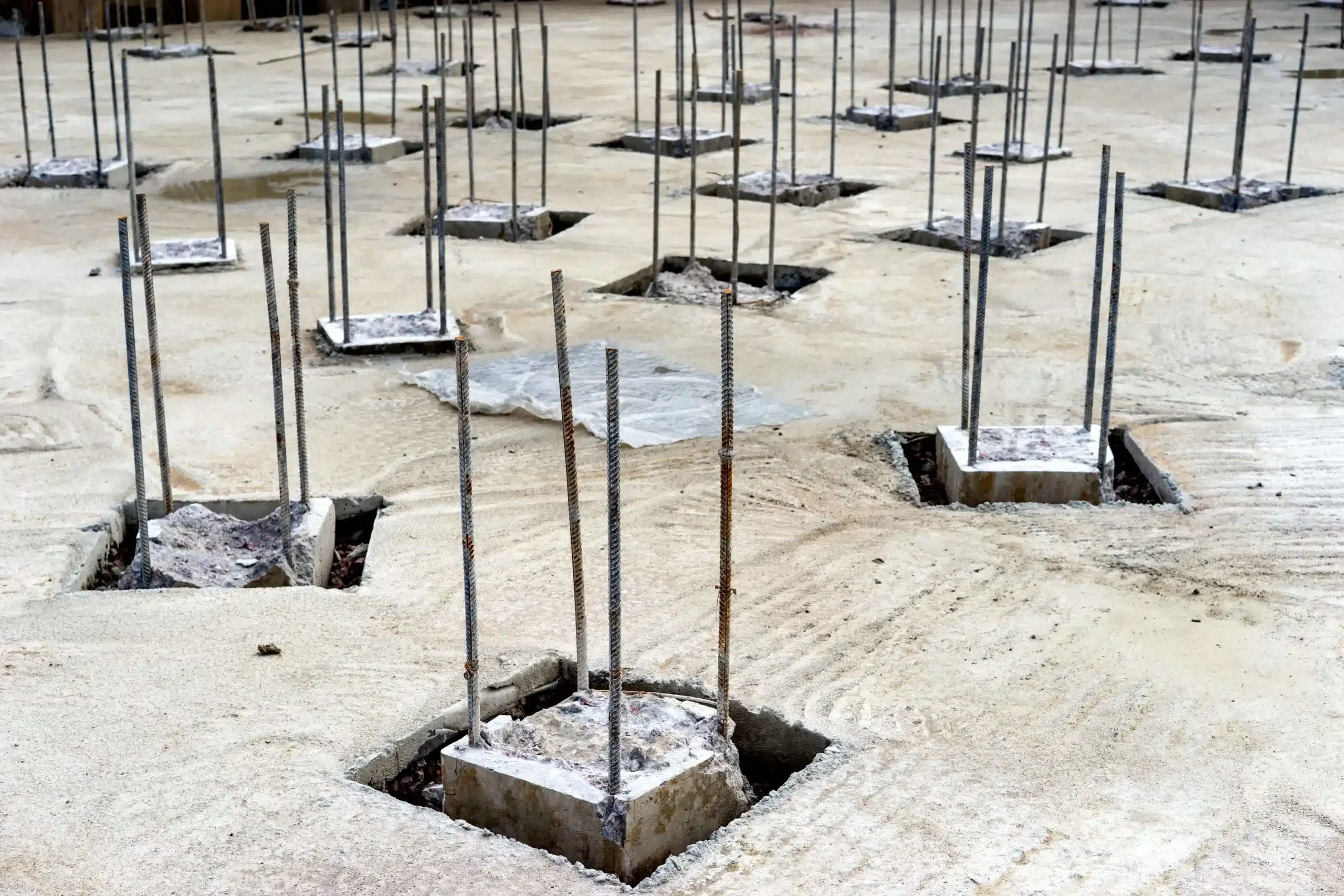
Concrete footings are the solid base under a foundation that supports the weight of a building. They’re made of reinforced concrete and poured into trenches beneath walls, columns, or piers, spreading the weight over the soil to prevent settling and shifting. When built correctly, they keep the foundation stable and support the building for the long term.
Why Are Concrete Footings Important?
Concrete footings make sure a building has a strong, stable foundation. They help distribute the building’s weight over a large area and lessen the pressure on the soil. This helps avoid issues like sinking, cracking, or uneven settling. Plus, footings keep everything anchored, especially in areas where the soil tends to shift, so they are key to keeping the whole structure safe and durable over time.
Pros and Cons of Concrete Footing
Concrete footings provide strong and lasting support for building foundations. They can hold heavy loads and help prevent problems such as sinking, cracking, and uneven settling. Footings connect to stable soil and bedrock when necessary. However, poor soil conditions or sizing and depth errors can make them less effective. Despite these challenges, when properly designed and installed, concrete footings are among the most reliable ways to support a building’s foundation.