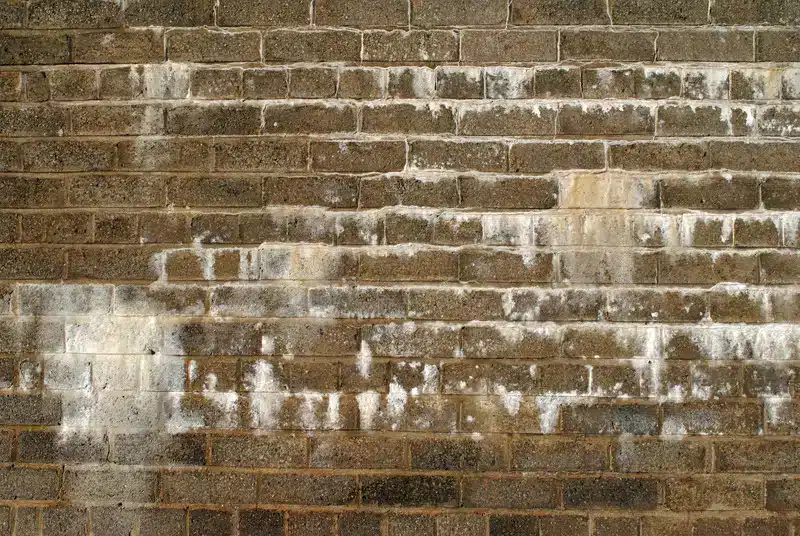
Efflorescence is that white, powdery substance you see on brick walls, concrete, or stone surfaces that are exposed to moisture. It appears as a white or gray deposit that can make surfaces look worn or dirty, especially against darker tones. The white, dusty appearance results from the presence of soluble salts such as carbonates, chlorides, and sulfates and can vary slightly depending on the surface material, texture, and mineral content.
How is Efflorescence Created?
Efflorescence happens when water moves through the pores or cracks in bricks, concrete, and stone. The water carries soluble salts that already exist in the materials or the surrounding soil as it travels through. When the water reaches the surface, it evaporates, leaving behind mineral residue that crystallizes into a distinct white coating. This is more common in foundations with poor waterproofing, but can also appear in brick walls in a garden where sprinklers are used daily. As more water passes through, this process repeats itself over and over again.
Is Efflorescence Mold?
Although both stem from moisture, efflorescence is completely different from mold, even though they may appear similar. Efflorescence is a mineral salt deposit and is non-toxic to humans. Meanwhile, mold is quite the opposite, as it’s a living organism that can cause a number of issues, like respiratory problems and allergies. To tell if you’re seeing mold or efflorescence, you can spray some water on the substance; if it’s efflorescence, it dissolves and disappears, but mold will stay behind.
What are the Types of Efflorescence?
There are two main types of efflorescence based on the process of their formation.
- Primary efflorescence: This type shows up on newer concrete or masonry structures, usually during the first year after construction. As construction materials cure and dry, they leave water on the surface. This water absorbs minerals, bringing them to the surface and causing efflorescence. This usually happens only once until the construction materials fully cure and dry, and once the minerals have been depleted, it usually stops.
- Secondary efflorescence: This is commonly found in older concrete or masonry structures. It primarily occurs due to external water sources, such as rain, groundwater, or plumbing leaks. When water from these sources penetrates the construction material, it carries soluble salts with it, which deposit on the surface after evaporation.
How to Remove and Prevent Efflorescence
Getting rid of efflorescence is not that hard. You can either apply a pressurized water jet to the surface, spray diluted vinegar onto the mineral deposits, or simply brush them off, depending on how stubborn the deposits are. The real solution is to eliminate moisture completely. Waterproofing your basement or foundation is the best way to prevent moisture intrusion and efflorescence.