
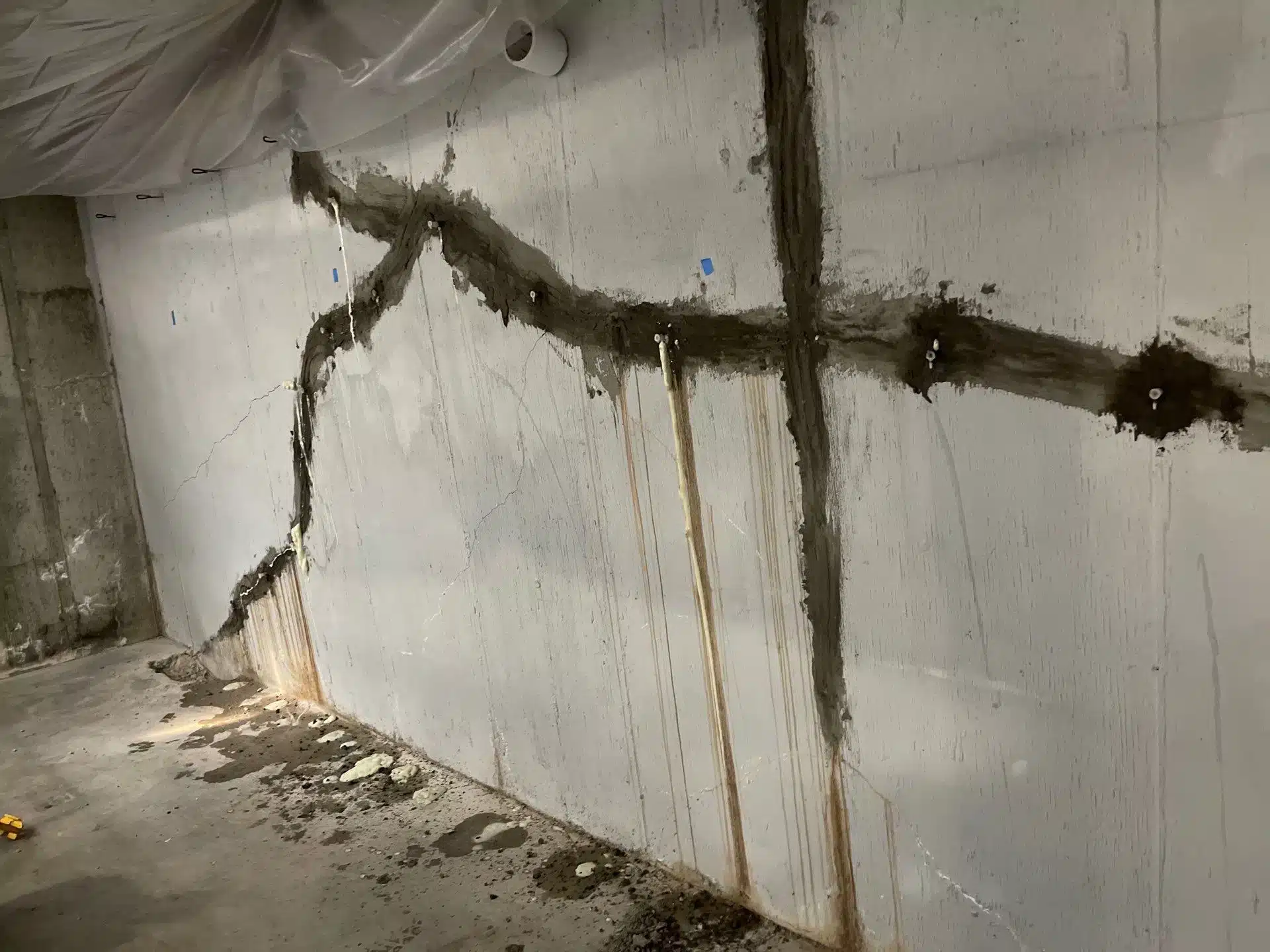
Sealing foundation walls helps prevent water from entering your basement or crawl space, which helps lower the risk of mold growth, structural damage, and higher energy bills. You can protect your foundation by coating the exterior walls before backfilling, or by treating the interior surfaces with waterproofing products. Exterior sealing provides the best protection by blocking water before it reaches your foundation, while interior methods help reduce moisture but are most effective when water pressure is low.
How to Seal a Foundation Wall?
Follow these steps for sealing foundation walls:
- Check your walls closely for any cracks, holes, or water entry points.
- Clean the surfaces with a stiff-bristled brush to remove dirt, dust, and flaking material.
- For cracks less than a quarter inch, you can apply masonry caulk.
- For larger gaps, apply hydraulic cement after mixing it per the package directions, pressing it firmly into place.
- Allow all repairs to dry fully before using any sealant products.
- Apply a waterproof coating using a brush or roller to ensure a smooth, even finish.
- Attach plastic sheeting as a moisture barrier on interior walls to redirect water into your drainage system.
Benefits of Sealing Foundation Walls
Using a sealant on your foundation walls prevents water from reaching your home’s base. The advantages of sealing foundation walls include:
- Prevents structural damage: Sealing blocks water from entering your foundation, which stops cracks and weakening that could harm your home’s stability.
- Blocks mold and mildew: With a sealed foundation, your home stays dry, preventing mold growth that can cause respiratory problems and allergies.
- Reduces energy bills: Your heating and cooling systems work efficiently by keeping moisture away from insulation.
- Increases home value: Buyers pay more for homes with protected foundations because they show good maintenance and a low risk of water damage.