
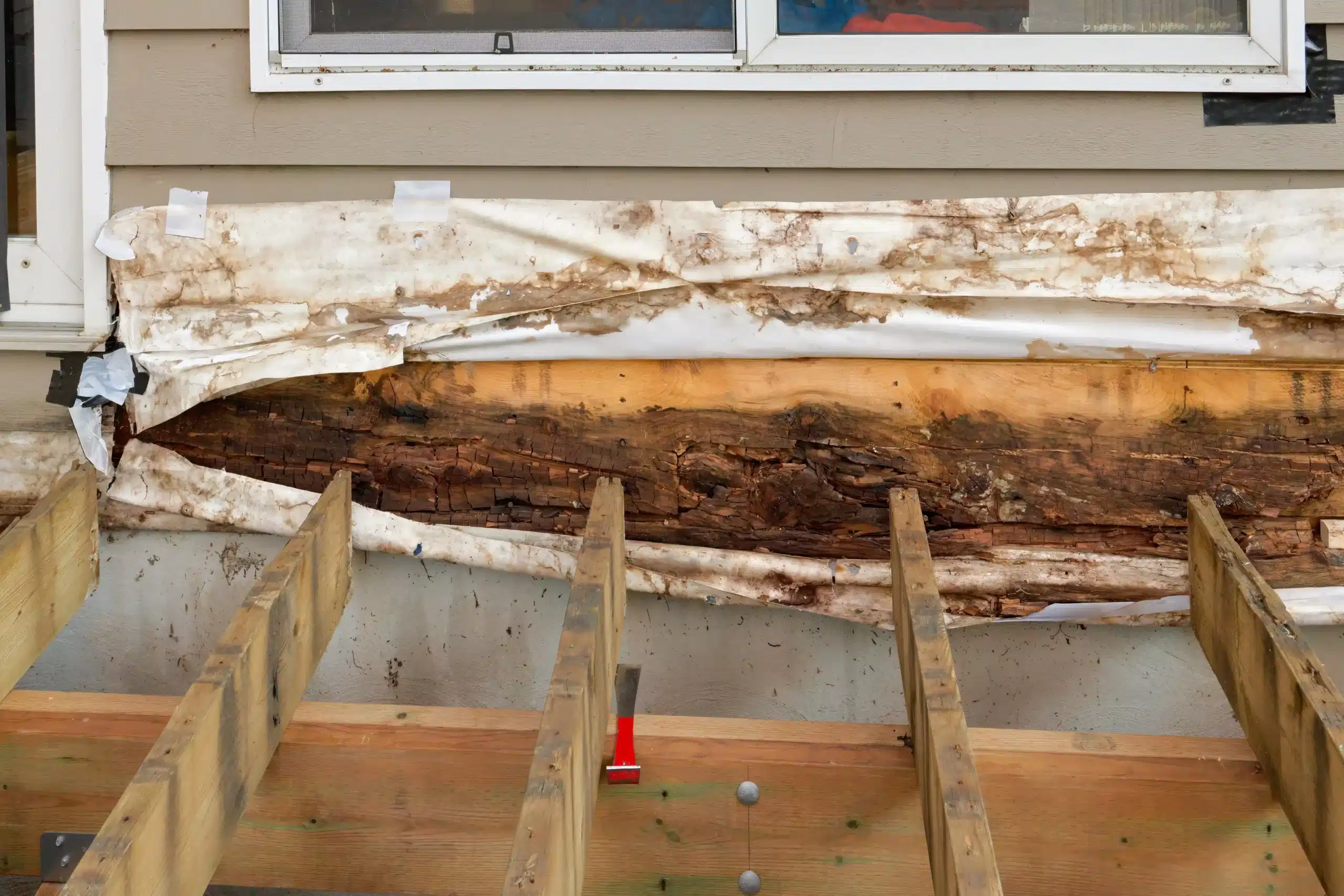
Rim joists are the structures made with pressure-treated wooden boards. They’re installed horizontally on top of your foundation wall and form the outer edge of your floor framing system. Running along the edges of your home, these span the regular floor joists at the ends and act as a connecting link that holds everything in place. These are like the wooden frame around a picture that keeps everything in place, and can be found in every level of a home with a wooden flooring system.
Why Are Rim Joists Important?
Rim joists are among the primary structural components that keep your home stable from the ground up. They keep the structure stable by distributing the weight of your entire house, including walls, roof, and everything inside, evenly across the foundation. However, they also maintain the shear resistance of your home, which is the capacity of the structure to handle horizontal forces, such as seismic activity or high winds. If rim joists aren’t installed properly, your home’s floors may start sagging, bouncing, or feeling uneven as more pressure is applied to these areas.
Where Are Rim Joists Located?
You can find rim joists in your basement or crawl space, where they meet the exterior walls. They are thick boards that run horizontally along the entire perimeter of your home. To inspect the rim joists, use a flashlight and gently press along the wood at several points to check for signs of moisture-related decay. Look for cracks, rotting, or pest infestations, as these all indicate rim joist damage. Any signs of sagging floors may also hint at compromised rim joists.
Rim Joist vs. Floor Joist
Rim joists and floor joists work together in keeping your home’s framing system stable and secure, but both joists serve different purposes. Floor joists run perpendicular to the foundation beams for support and extend from one side of your home to the other. And rim joists run along the exterior walls and secure the ends of floor joists, forming the outer edge of the flooring system. Floor joists are usually spaced 16 or 24 inches apart throughout the interior of your home. But rim joists are singular boards that run continuously along the outer edge.