
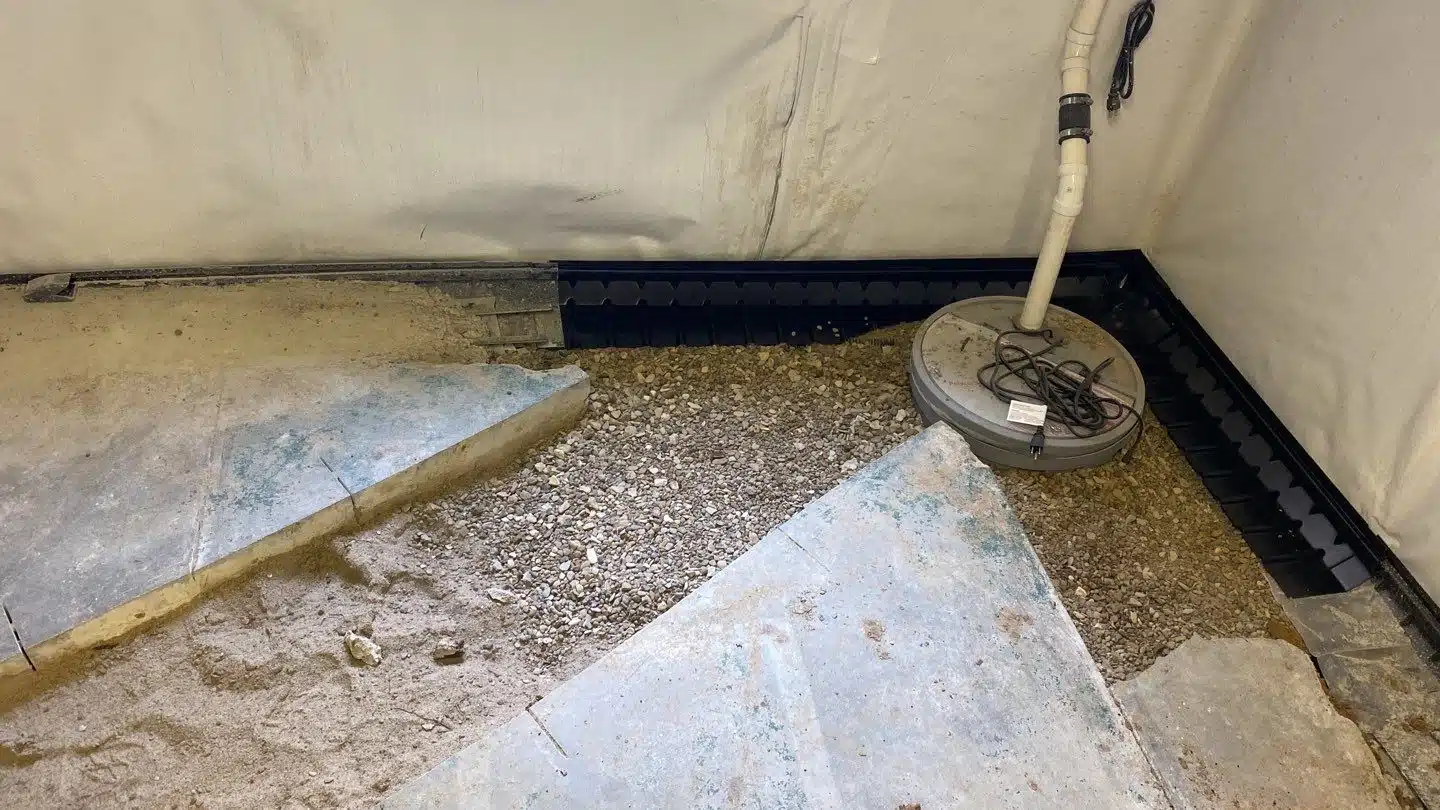
An interior drain tile system is a drainage solution installed along the inner perimeter of the foundation floor to prevent water from pooling. It uses a perforated pipe buried under a bed of washed gravel to collect excess water at the base of the foundation and then release it away from the property using a sump pump or gravity flow. This system is used to drain water from under and around a basement or a crawl space, preventing the foundation from becoming waterlogged. It is a dependable drainage system for areas like Kansas, which are mostly humid and have clay-heavy soil.
How Does an Interior Drain Tile System Work?
A trench is dug along the edge of the foundation floor and is filled with gravel. A PVC pipe goes into the trench, which allows water to flow freely along the path of least resistance. Once everything is set in place, concrete is poured over the trench and leveled with the rest of the floor. Water that seeps in through the foundation walls or surrounding soil flows through the pipe to the sump pump, which expels water out through a discharge line away from the house. The main function of the drain tile is to give water a proper way to discharge so that it does not become a problem inside the home.
When is an Interior Drain Tile System Needed?
An interior drain tile system is needed when the foundation begins to experience water intrusion. If you are seeing wet foundation walls and water pooling on the foundation floor, especially after heavy rain and snowmelts, this indicates that water has been pushing through the structure. Installing a drain tile in such situations helps minimize water infiltration and provide lasting protection from moisture.
Benefits of an Interior Drain Tile System
The biggest advantage of an interior drain tile system is that it intercepts moisture before it can spread through the foundation and cause water damage. It is a simple, cost-effective method, and once installed, the system can last for several decades, making it a good long-term investment. It is less disruptive than an external drain tile system, which requires excavation. The maintenance requirement is also minimal, usually once a year to unclog the drain.