
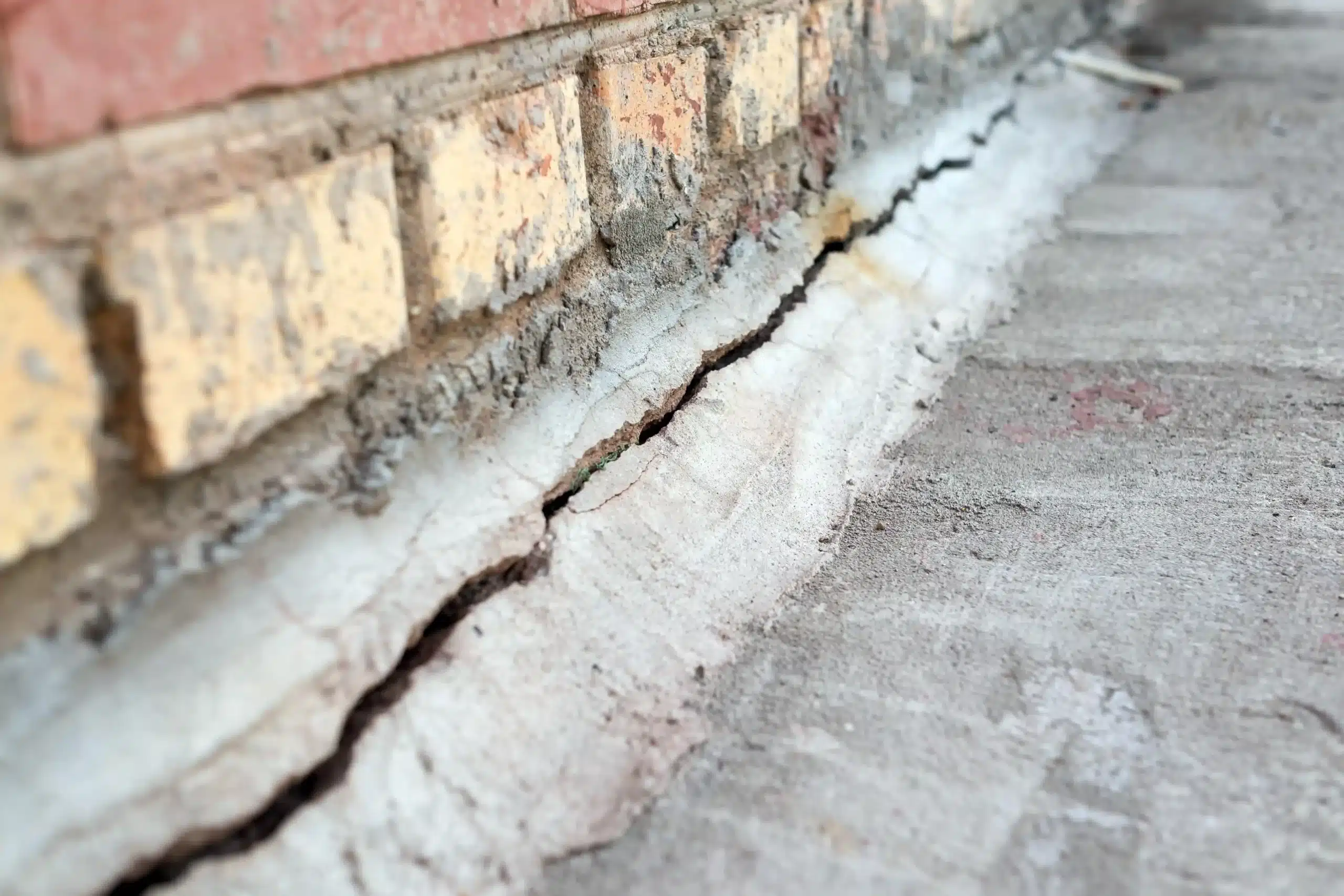
Foundation cracks are a common problem in homes. In many cases, cracks appear on concrete foundations during the curing process, and these are so minor that they appear to be a non-issue. But sometimes, they’re a sign of a serious underlying problem, and if left unaddressed, can spiral into much worse situations. When are foundation cracks a problem, and what can you do about them?
Why Do Foundation Cracks Happen?
Problematic foundation cracks are often a sign of an underlying problem. They develop due to all kinds of reasons, from the surrounding soil to the initial installation and pour.
Natural Settling of the Home
The soil beneath your home’s foundation experiences changes in moisture throughout the year. These changes cause the soil to shrink or swell, or settle unevenly. As a result, your home’s construction settles, causing cracks in the foundation.
Soil Movement or Hydrostatic Pressure
Excess water in the soil, often due to heavy rainfall—especially in areas with a naturally high water table, creates hydrostatic pressure against the foundation. Hydrostatic pressure can push your foundation walls, causing horizontal cracks along the foundation.
Temperature Changes and Freeze-Thaw Cycles
Changes in temperature and freeze-thaw cycles cause soil shrinkage and swelling, particularly in clay-rich soils. Low temperatures cause the soil to swell, whereas high temperatures cause it to shrink, creating voids beneath your foundation that lead to cracks.
Water Damage or Poor Drainage
Improper or inadequate drainage systems, recent rainfall flooding, plumbing disasters, and poor grading around the home are all causes of water damage. Hydrostatic pressure is a leading cause of foundation cracks.
Construction Flaws or Weak Materials
Another common reason for foundation cracks is construction flaws or the use of weak materials. If the construction process did not include soil compaction, adequate reinforcement, or proper drainage, the foundation is at risk of cracking.
Types of Foundation Cracks and What They Mean
There are various types of foundation cracks, and each means something different. Inspecting the cracks in your foundation can give you plenty of details about their possible cause.
Hairline Cracks
Hairline cracks are very thin, usually less than ⅛ inch, and they typically appear as the concrete cures and dries. They are generally harmless and non-structural, but should still be sealed and repaired to avoid water seepage.
Vertical Cracks
Vertical cracks commonly appear in straight lines and are caused by natural settlement of a foundation. Whether vertical cracks are problematic depends on how wide they are and how evenly or unevenly your home is settling.
Horizontal Cracks
Horizontal cracks are the most serious type of cracks. They indicate hydrostatic or soil pressure pushing inward, which can cause the walls to bow, bulge, or crack. Horizontal cracks require immediate attention to prevent structural collapse.
Stair-Step Cracks in Brick or Block Walls
Stair-step cracks in brick or block walls appear as zigzag cracks that follow mortar joints. These cracks indicate significantly uneven foundation settlement, soil movement, or excessive water pressure.
Diagonal Cracks
Diagonal cracks usually form at an angle between 30 and 75 degrees, indicating significant foundation settlement or structural movement. These cracks suggest that your foundation is under stress and requires immediate attention from a foundation specialist.
Warning Signs That a Foundation Crack is a Problem
Some cracks are problematic, while others are a natural construction phenomenon with no structural damage. Here are some warning signs to detect if the cracks are a problem:
Cracks Wider Than ⅛ Inch
Any crack that is wider than ⅛ inch indicates that your foundation is undergoing an ongoing problem. That means you need to schedule a professional inspection to resolve the problem and seal the cracks.
Horizontal or Stair-Step Cracks
Horizontal or stair-step cracks only occur when your foundation is settling unevenly. Uneven settlement can cause severe structural problems in your home, so these cracks should not be taken lightly.
Cracks That Continue to Grow Over Time
Many cracks appear as your home settles, indicating no serious problems. However, if a crack keeps growing over time, it indicates that your foundation is continually under stress and hydrostatic or soil pressure.
Water Leakage or Dampness Around Cracks
A dry crack is by no means something that you should ignore, but it becomes an even greater problem if it’s damp or actively leaking. Water leakage or dampness around cracks indicates severe hydrostatic pressure, and that your home is at risk of further water-related damage.
Windows/Doors Sticking or Uneven Floors Near Cracked Areas
In many cases, cracks appear along the trim and molding of doors and windows, especially diagonal cracks. These cracks can cause the windows and doors to stick and not close or open properly. This problem is often accompanied by uneven floors and cracks.
Risks of Ignoring Foundation Cracks
Ignoring cracks can lead to various problems down the line. From water damage to a compromised structure, each of these puts your family at risk.
Water Infiltration and Basement Leaks
Over time, cracks you ignore can become damp and develop active water leaks. Water infiltrates your home, particularly your basement, compromising your indoor environment.
Mold and Mildew Growth
Cracks provide a gateway for moisture to seep into your home, and moisture creates a perfect environment for mold and mildew growth. Mold isn’t just a visual problem, either; mold spores can travel through the air, compromising your indoor air quality.
Structural Instability and Safety Hazards
Cracks, when ignored, can widen over time, indicating significant structural damage. Failing to address this damage can result in bouncy, uneven floors, sticking doors and windows, and bowing walls, which are all safety concerns.
Higher Repair Costs Over Time
Repairing minor, initial cracks is a cost-effective measure. Not addressing these cracks means you are letting them widen over time and letting the damage escalate. Each day you ignore the cracks keeps adding to the cost of finally repairing them.
Reduced Home Resale Value
A foundation with cracks, water leaks, mold, and other issues is not a good sign for any potential buyer. As a result, your home’s resale value will be reduced significantly.
How Professionals Assess Foundation Cracks
As soon as you notice cracks in your foundation, it’s best to schedule a professional assessment. During this process, professionals will examine every possible factor, determine the underlying causes of the problem, and suggest a targeted approach to repairs.
Initial Inspection and Measurements
The assessment begins with an initial inspection of your foundation. A professional will take the measurements of your home’s foundation and thoroughly check each area for potential problems.
Identifying Structural vs. Non-Structural Cracks
Some cracks do not indicate structural problems, while others are ticking time bombs. A professional contractor will identify structural and non-structural cracks to figure out what problems your foundation may be facing.
Checking For Movement or Widening Over Time
Your foundation repair contractor won’t just check for physical signs of damage. They’ll also take the time to ask you about possible foundation movement and cracks that have changed over time. This gives them valuable information about your home’s structural integrity.
Moisture Testing and Soil Evaluation
A team of professionals will conduct a detailed moisture test on your foundation to determine which areas are leaking and what drainage issues you’re facing. They’ll also conduct a soil evaluation to determine what preventive measures could protect your home from soil erosion and movement.
Solutions for Problematic Foundation Cracks
If problematic foundation cracks are identified, your contractor will likely recommend one of several solutions. There’s no universal answer to foundation problems; it all depends on what specific problem you’re facing and what fix stands the best chance of correcting it.
Foundation Crack Injection
Foundation crack injection is a quick, cost-effective, and durable crack repair method. It involves epoxy or polyurethane foam injections that seal the cracks and stop active water leaks.
Waterproofing Solutions
To prevent cracks or leaks from occurring again in the future, experts provide comprehensive waterproofing solutions that keep your basement dry and protected from hydrostatic pressure, a common cause of cracks.
Drainage Corrections
A great solution for problematic foundation cracks is drainage correction. Improving drainage eliminates the root cause of water-saturated soil pushing against foundation walls, preventing future damage.
Structural Reinforcement with Waler System
If needed, your contractor may suggest implementing structural reinforcement with waler systems, which help strengthen and stabilize your bowing or cracking walls, restoring them to their ideal condition.
Preventing Future Foundation Cracks
In addition to timely solutions, preventative measures help keep your foundation stable and structurally sound for years to come.
Maintain Proper Grading Around Your Home
Proper grading involves improving the ground around your home so that it slopes away from the foundation. This drop and slope helps divert any water near your home away from the foundation, which prevents pooling and oversaturation.
Clean Gutters and Extend Downspouts
Clean gutters and extended downspouts are critical for your foundation’s health. Gutters are your first line of defense against water damage, so they should be clean and properly functioning.
Install or Maintain Sump Pumps
Sump pumps are installed in your basement to protect your home from rising water levels. A sump pump integrated with an efficient drainage system can help you keep your basement safe and dry.
Schedule Regular Foundation Inspections
Your foundation repair solutions and waterproofing components require regular maintenance to work properly and efficiently. Schedule regular foundation inspections to detect early signs of damage and ensure your foundation is always well-equipped to handle it.
Contact Lamunyon For Reliable Foundation Repair Solutions
Foundation cracks are common, but they’re not something you should take lightly. Minor cracks are normal, but anything serious warrants further investigation, and our team at Lamunyon Dry Out and Foundation Repair is ready to step in. We know how to tell the difference between problematic cracks and non-problematic cosmetic damage, and we can help you restore your home’s safety. Reach out today to schedule your inspection, and let our experts help.