
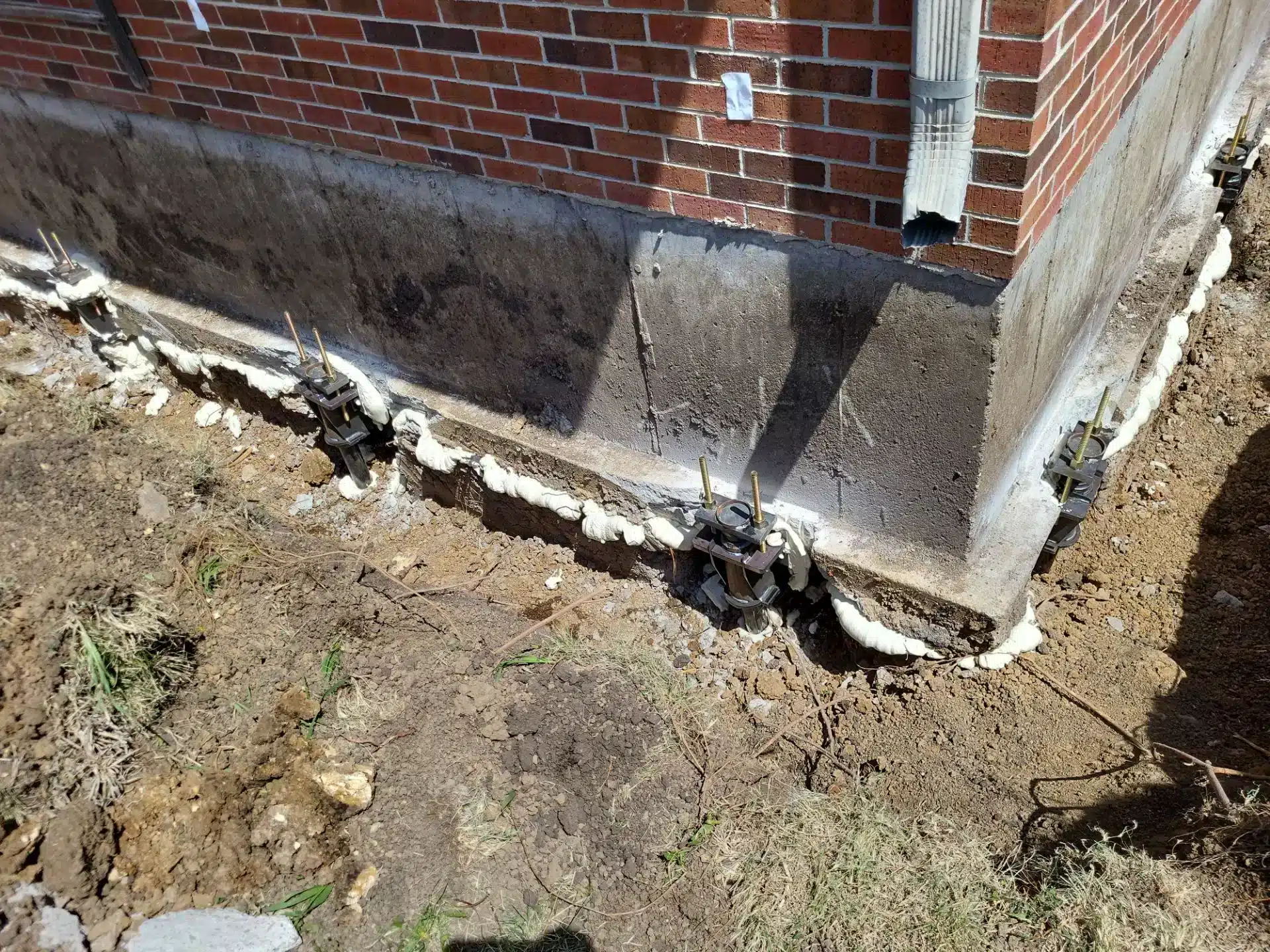
A house foundation is the structural base of the entire home. It supports the building’s weight and safely transfers it into the ground, keeping everything level and steady over the years. In areas where soil can shift and moisture levels fluctuate, a strong, well-maintained foundation is essential. Without it, your home could shift, crack, and face serious problems in the future.
Why is a Foundation Important?
A sturdy foundation supports everything and bears the weight of the house; it’s key to how durable a building is. Without a foundation, a house won’t last long. There are different types of foundations, from crawl spaces to basement systems, with each serving a specific purpose.
However, foundations develop problems over the years, like cracked walls, uneven floors, doors that stick, and windows that won’t line up properly. Taking care of foundation issues early helps prevent these problems and protects the home’s safety, structural integrity, and long-term value.
Common Types of House Foundations
Homes are built on different types of foundations based on the location, soil, climate, and home design. Each type supports the home, but in a different way.
- Slab foundation: A flat layer of concrete poured directly on the ground. It’s simple, low to the ground, and common in newer homes with stable soil.
- Crawl space foundation: Raises the home slightly off the ground, creating a small space underneath. This allows access to plumbing and helps keep ground moisture away from the home.
- Basement foundation: Includes a full or partial level below the home. It provides strong support and extra storage or living space, but requires proper moisture control
- Poured concrete: A strong, long-lasting foundation type commonly used for basements, crawl spaces, and slabs. It is preferred because it offers better strength and moisture resistance than block walls.
- Stone: These foundations are commonly found in older homes and can be made from various stones, such as fieldstone, cut stone, or quarried stone. If a house is not level or poorly built, a stone foundation may crack or bow, potentially causing water leaks.
- Block: Common house foundations using blocks include concrete masonry units (CMU) for basements and crawl spaces, offering durability and moisture resistance. These, along with pier and beam and strip footings, support walls and floors in various soil conditions.